
01
Material Analysis
Review structure, thickness, layers and response to heat or pressure.
Stainless steel is used to produce formed and assembled metal components. Depending on the part design, hydraulic presses can perform stamping, bending, deep drawing, and press fitting. Huajia configures press force, stroke, tooling, and controls to suit the material thickness and production requirements.
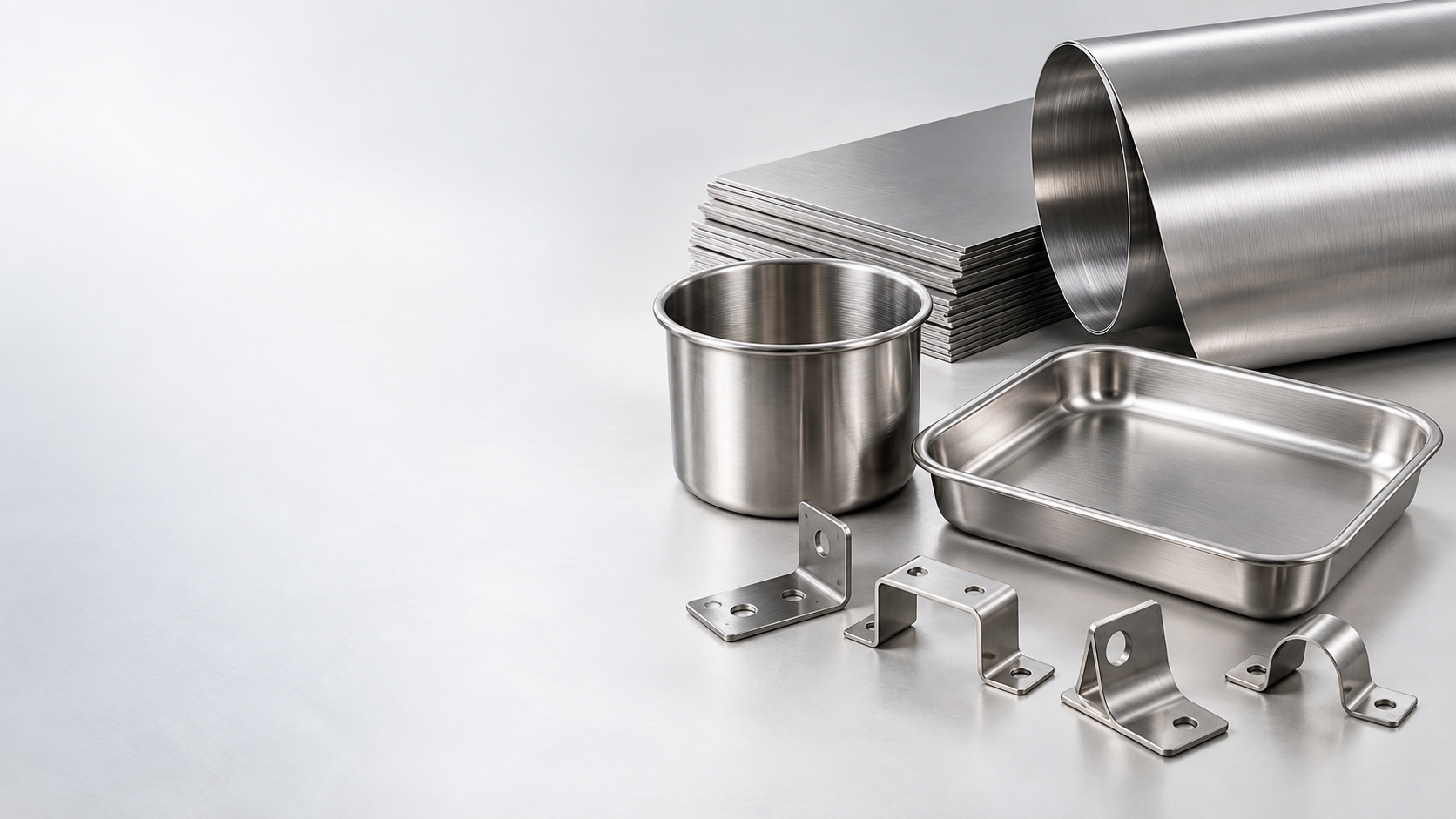
Stainless steel is used to produce formed and assembled metal components. Depending on the part design, hydraulic presses can perform stamping, bending, deep drawing, and press fitting. Huajia configures press force, stroke, tooling, and controls to suit the material thickness and production requirements.
Share the material grade, thickness, layers and a photo or drawing of the finished part.
Review mold dimensions, heating, cooling, pressing and required part quality.
Match working area, pressing force, opening, controls and production handling.
Discuss output per shift, cycle time, automation and destination factory conditions.
A structured engineering workflow connects your finished product to forming technology, equipment configuration and agreed manufacturing checks. Images appear when uploaded to the material's existing method fields.
Review structure, thickness, layers and response to heat or pressure.
Clarify the finished part, forming surface, geometry and mold requirements.
Evaluate the required heating, pressing, cooling and dwell sequence.
Discuss platen dimensions, force, opening, stroke and control options.
Match mold loading, handling, thermal needs and working space.
Plan equipment integration, testing, documentation and support scope.
Share your product drawing or sample, material requirements and target output. Our team can discuss a suitable forming process and machine configuration rather than starting with tonnage alone.