
01
Material Behavior
Understand compression, recovery, thermal response and how material properties affect forming.
Mold clamping uses suitable bolts and fixtures to secure the upper and lower molds to a hydraulic press. Correct positioning and fastening help keep the tooling stable during pressing
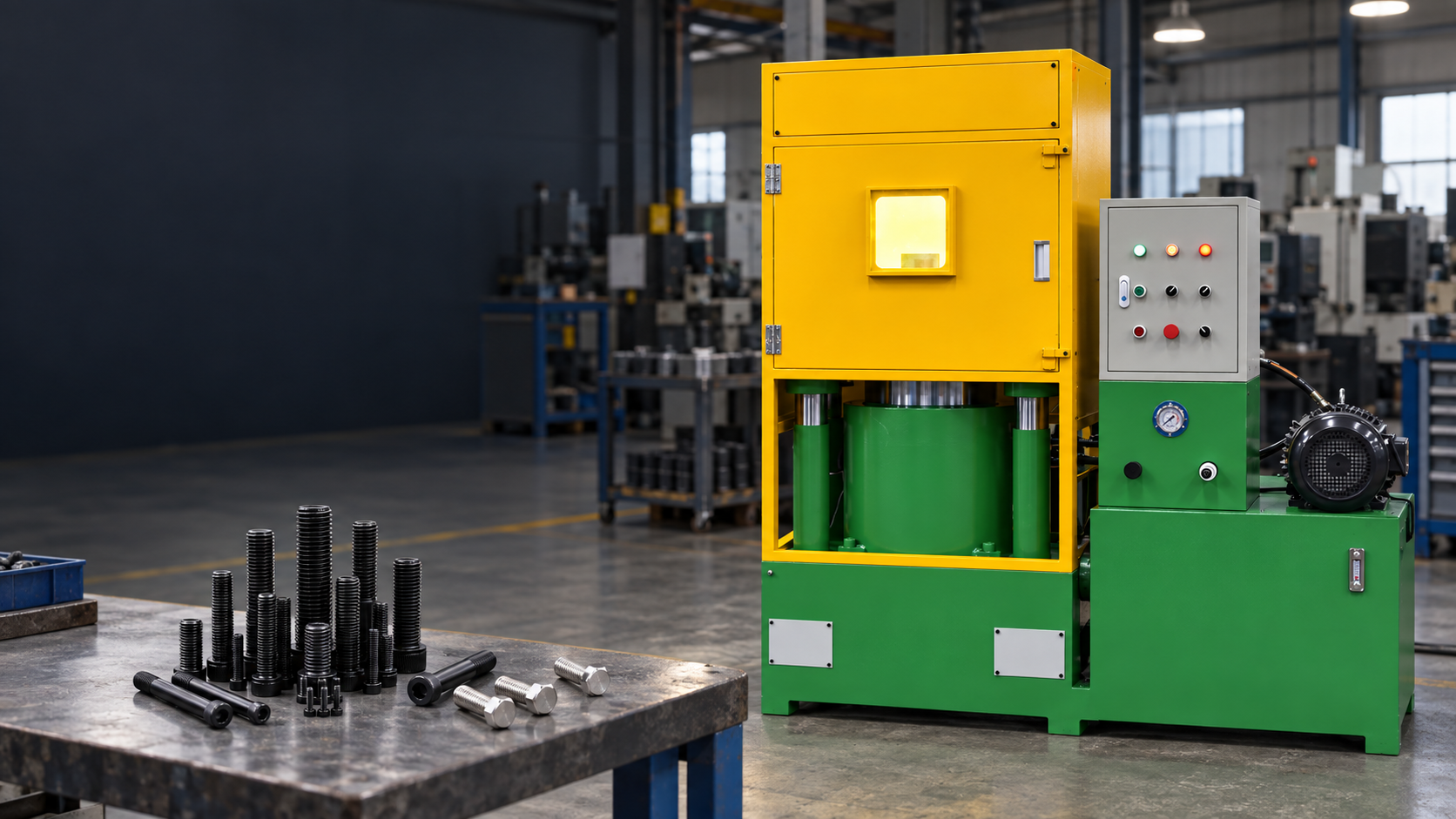
Mold clamping uses suitable bolts and fixtures to secure the upper and lower molds to a hydraulic press. Correct positioning and fastening help keep the tooling stable during pressing
Identify the material structure, thickness, thermal behavior and compression characteristics.
Evaluate heating or cooling, pressure, holding time and mold requirements.
Determine press force, working area, stroke, opening and hydraulic control requirements.
Discuss cycle time, capacity, automation, repeatability and testing requirements.
The engineering review connects material behavior, forming conditions, tooling, machine structure, production capacity and agreed verification requirements.
Understand compression, recovery, thermal response and how material properties affect forming.
Determine whether preheating, heating, cooling or separate processing stages are required.
Discuss applied force, pressure build-up, holding time and repeatability.
Review mold dimensions, working area, stroke, opening height and demolding.
Evaluate production volume, loading, transfer time and automation requirements.
Agree on process parameters, inspection methods and equipment testing requirements.
Send us the product drawing, material specifications, mold details and production output requirements.
We can discuss the forming process, press configuration and supporting equipment appropriate for your manufacturing application.