How Carbon Fiber Pickleball Paddle Are Made?
A carbon fiber pickleball paddle requires more than bonding a carbon face to a lightweight core. If manufacturers overlook layup, resin behavior, mold design, or curing consistency, defects and unstable production can follow. I find that the safest approach is to define the complete manufacturing process before choosing materials, molds, or hot-press equipment.
Carbon fiber pickleball paddles are generally made through material preparation, face and core assembly, molding or bonding under controlled heat and pressure, cooling, demolding, trimming, surface finishing, handle assembly, and inspection. However, the exact process depends on the paddle structure, carbon reinforcement, core, resin or adhesive system, mold, and required production cycle.
This means that manufacturers should not begin with a press tonnage or a copied temperature setting. From our discussions about related carbon-fiber hot-press projects, I have learned that reliable equipment selection starts with the product structure and validated process window.
How Is a Carbon Fiber Pickleball Paddle Manufactured and Matched to a Hot Press?
Producing a carbon fiber pickleball paddle can look simple from the outside. However, small variations in bonding, temperature, pressure distribution, or cooling can affect consistency.[^1] A factory therefore needs a repeatable workflow that connects its materials and paddle design to measurable equipment requirements.
A typical process includes preparing the carbon-fiber faces and core, completing the layup or assembly, molding and curing the structure, cooling it under suitable conditions, demolding, trimming, finishing, and inspecting the paddle. Manufacturers must validate each stage for their specific material system rather than treat one production recipe as universal.
1. Material preparation and assembly
The manufacturer first prepares the face sheets, core, bonding materials, edge components, and handle structure. The carbon reinforcement may use woven fabric, unidirectional layers, prepreg, or another qualified format. Product-specific material details should be confirmed with the material supplier.
The face alone does not determine paddle quality. The following elements interact:
- Carbon-fiber orientation and layup
- Core material, thickness, and cell structure
- Resin or adhesive compatibility
- Bond-line control
- Edge and handle construction
- Mold surface and dimensional accuracy
Dust, moisture, contamination, or inaccurate cutting can create weak bonding or cosmetic defects. Factories should document storage conditions, preparation times, and material batch numbers.
2. Molding, curing, and cooling
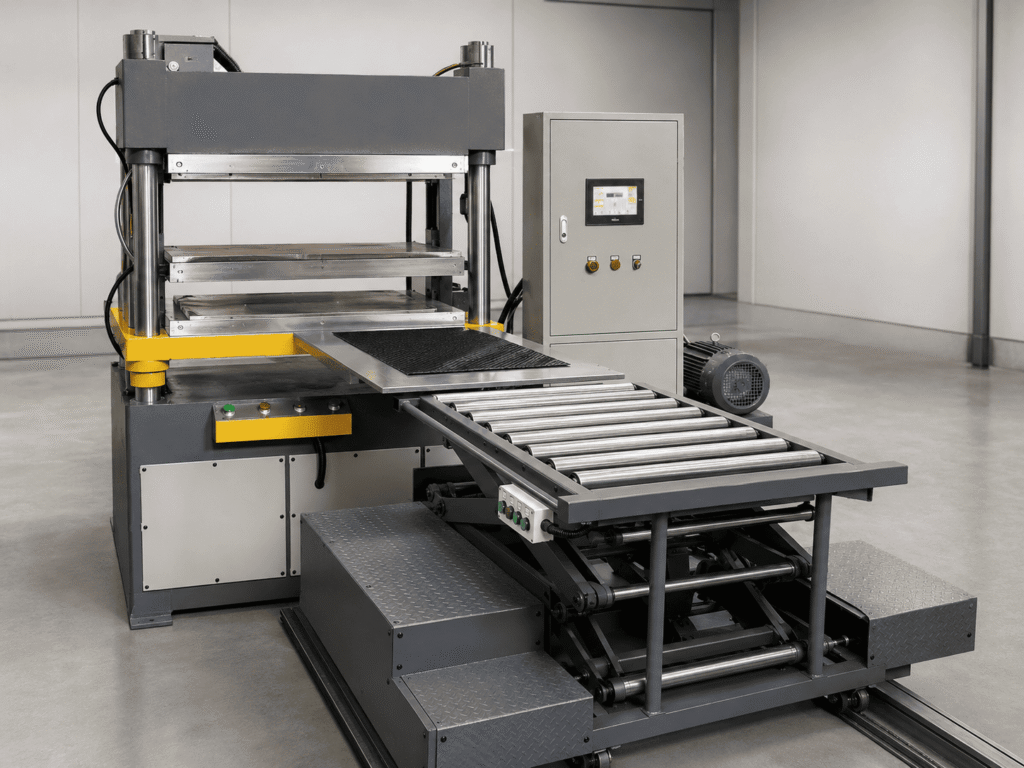
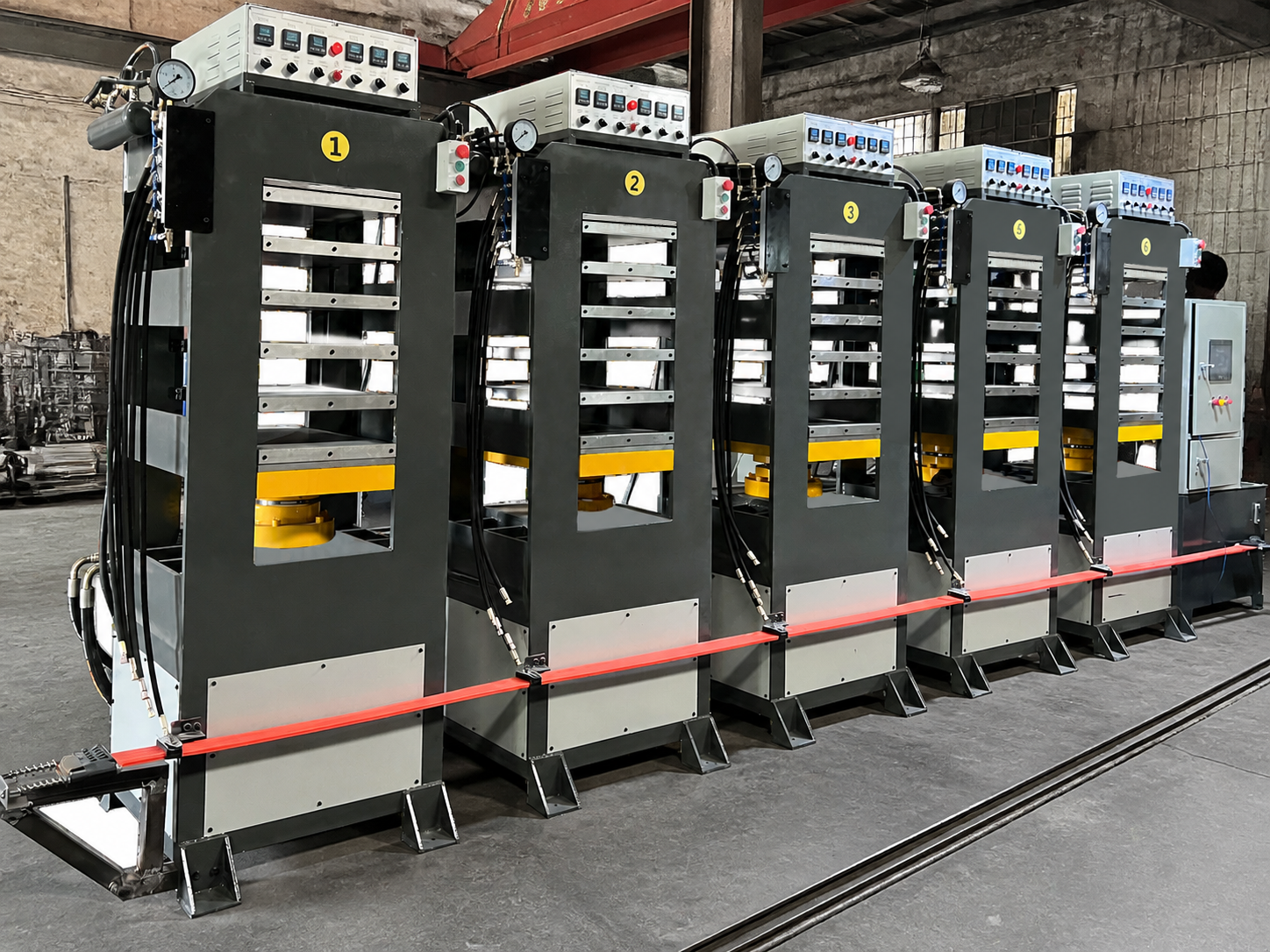
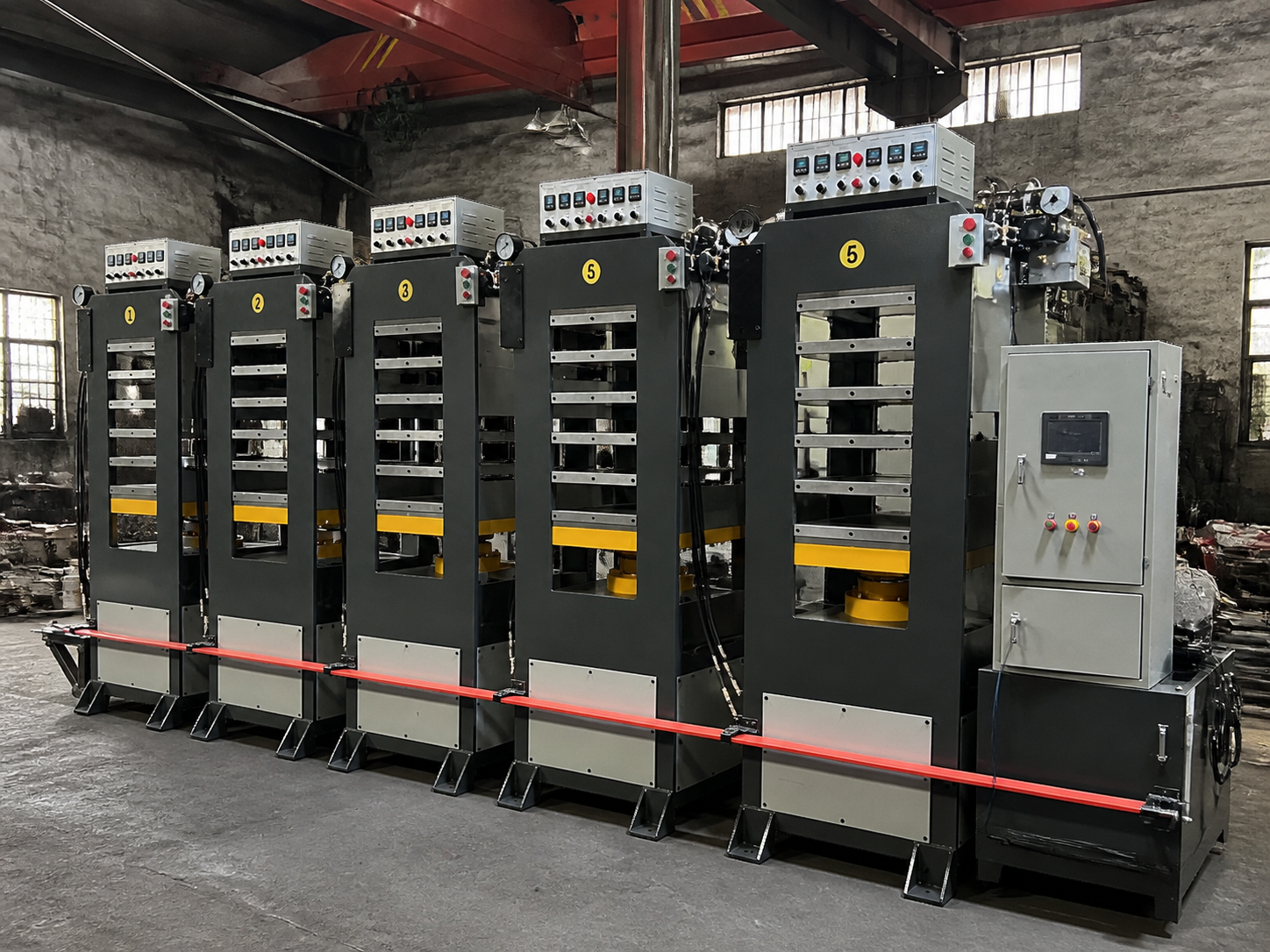
The assembled components enter a mold or fixture. A hot press then applies a controlled combination of temperature, force, position, and time. Some processes form and bond the paddle in one stage. Others use separately prepared skins, multiple bonding operations, or hot-and-cold press stages.
Higher pressure and temperature do not automatically produce a better paddle.
Excessive pressure may crush or distort some cores.[^2] Insufficient pressure may leave voids or uneven bonding.[^3] Incorrect temperature can cause incomplete curing, resin over-flow, surface defects, or unnecessary cycle time.[^4] Factories must establish settings through material data, trials, mold validation, and qualified technical evaluation.
Cooling is also part of the process. Depending on the construction, controlled cooling may reduce deformation and improve handling before demolding.[^5]
3. Trimming, finishing, and inspection
After demolding, the factory trims the paddle profile and completes drilling, sanding, edge finishing, coating, graphics, grip installation, and final assembly as required. Carbon-fiber dust requires suitable extraction and worker-protection controls.
Inspection may include:
- Dimensions, thickness, weight, and balance
- Surface appearance and edge condition
- Bond integrity and flatness
- Handle alignment
- Process records and batch traceability
- Product-specific mechanical or performance tests
Testing methods and acceptance limits require verification against the manufacturer’s design specification and applicable market requirements.
4. Translating the process into press specifications
I often see buyers focus on nominal tonnage. However, force must be evaluated with mold area and required pressure per unit area:
Required force = effective pressing area × validated process pressure
The engineering team should also consider a justified safety margin. It should not simply purchase the largest available press.
| Press factor | Why it matters |
|---|---|
| Platen size | Must support the mold and planned cavity layout |
| Temperature uniformity | Helps maintain consistent curing across the mold |
| Platen parallelism | Supports even pressure distribution |
| Stroke and daylight | Must accommodate mold loading and opening |
| Cooling method | Influences cycle time and demolding stability |
| Controls and data logging | Improve recipe control and traceability |
| Automation | Affects labor, handling, and production capacity |
Before proposing a machine, we normally request the product drawing, materials, mold dimensions, cavity count, target output, heating and cooling method, and trial-process data. If those details remain unknown, the machine specification remains an estimate.
Frequently Asked Questions About Carbon Fiber Pickleball Paddles
Is every carbon fiber pickleball paddle hot pressed?
No. Production routes vary by face material, core, resin system, bonding method, and factory design. Some paddles use hot pressing, while others may combine preformed skins with separate bonding stages. Buyers should verify the proposed process through samples and production trials.
What determines the required press tonnage?
The required tonnage depends mainly on the effective mold area and validated pressure per unit area. Mold layout, cavity number, force distribution, and engineering margin also matter. Nominal tonnage alone cannot confirm that a press is suitable.
Can one press manufacture different paddle models?A press may support several models if its platen dimensions, force range, stroke, temperature control, and fixtures cover each process. Manufacturers should compare every mold and material recipe before assuming compatibility.
How should buyers evaluate a hot-press supplier?
Buyers should review engineering calculations, component specifications, temperature-uniformity testing, platen-parallelism records, control functions, factory acceptance procedures, and after-sales support. Any certifications should be treated as documents to verify rather than as substitutes for technical evaluation.
Conclusion: Planning Carbon Fiber Pickleball Paddle Production
A carbon fiber pickleball paddle is made through a connected sequence of material preparation, assembly, molding, cooling, trimming, finishing, and inspection. The correct production route depends on the complete paddle structure, not only its carbon face. Huajia Hydraulic can evaluate your product drawings, materials, mold dimensions, process requirements, and output target to configure a suitable hot press or integrated production solution. Contact us to discuss your application before finalizing equipment specifications.
[^1]: "1825 Composite Cure Process Modeling and Simulations ...", https://ntrs.nasa.gov/api/citations/20160012030/downloads/20160012030.pdf. Composite-processing research shows that variations in thermal history, consolidation pressure, resin flow, and cooling can alter cure state, void content, residual stress, and dimensional consistency; the findings are broadly applicable but are not direct performance tests of pickleball paddles. Evidence role: mechanism; source type: research. Supports: Composite consolidation and cure outcomes are sensitive to temperature history, applied pressure, resin flow, and cooling conditions.. Scope note: The cited mechanisms concern composite structures generally rather than pickleball paddles specifically. [^2]: "compressive strength to weight ratio optimization of", https://etd.ohiolink.edu/acprod/odb_etd/ws/send_file/send?accession=akron1145900147&disposition=inline. Mechanical studies of foam and honeycomb sandwich cores show that compressive loading above the core's plateau or crushing strength can cause cell buckling, collapse, and permanent deformation; the applicable pressure threshold depends on the specific core material, density, geometry, and temperature. Evidence role: mechanism; source type: paper. Supports: Cellular and honeycomb cores can undergo cell buckling, crushing, or permanent deformation when compressive stress exceeds their strength.. Scope note: The mechanism is established, but no universal pressure limit can be inferred for an unspecified paddle core. [^3]: "Void consolidation of thermoplastic composites via non ...", https://udspace.udel.edu/items/226c78a3-1a62-49bd-9c3b-c74a19ca8ef0. Composite-consolidation and adhesive-bonding studies associate inadequate pressure with incomplete interfacial contact, retained porosity, and nonuniform bond-line thickness; the required pressure remains specific to the resin, adhesive, adherends, and core architecture. Evidence role: mechanism; source type: paper. Supports: Adequate consolidation pressure promotes intimate contact and void removal, while insufficient pressure can leave porosity or an irregular bond line.. Scope note: The evidence supports the general mechanism but cannot establish a suitable paddle-processing pressure without material-specific testing. [^4]: "1825 Composite Cure Process Modeling and Simulations ...", https://ntrs.nasa.gov/api/citations/20160012030/downloads/20160012030.pdf. Thermoset cure research shows that temperature governs reaction kinetics and resin viscosity: temperatures or dwell times that are too low can leave an incomplete cure, while poorly controlled heating can promote excessive flow or defects and an unnecessarily conservative cycle can extend production time. Evidence role: mechanism; source type: paper. Supports: Temperature controls thermoset reaction rate, viscosity, resin flow, degree of cure, and the time needed to complete a cure cycle.. Scope note: The direction of these effects is well established, but exact outcomes depend on the resin or adhesive formulation and part geometry. [^5]: "analysis of process induced shape deformations and", https://scholarworks.indianapolis.iu.edu/bitstreams/f7118fc8-e4cb-4a6f-b636-2bd0cdfca838/download. Research on process-induced deformation in thermoset composites identifies cooling history, thermal-expansion mismatch, and demolding temperature as contributors to residual stress and warpage; controlled cooling can therefore support dimensional stability, although its effect on paddle handling has not been directly established. Evidence role: mechanism; source type: paper. Supports: Cooling history and demolding temperature influence thermal residual stresses, spring-in, warpage, and dimensional stability in cured composites.. Scope note: The evidence directly addresses composite deformation but only contextually supports improved handling before paddle demolding.