
India Carbon Fiber Sheet Production Project with Two-Layer Hot Press
Customer Background &
Production Goals
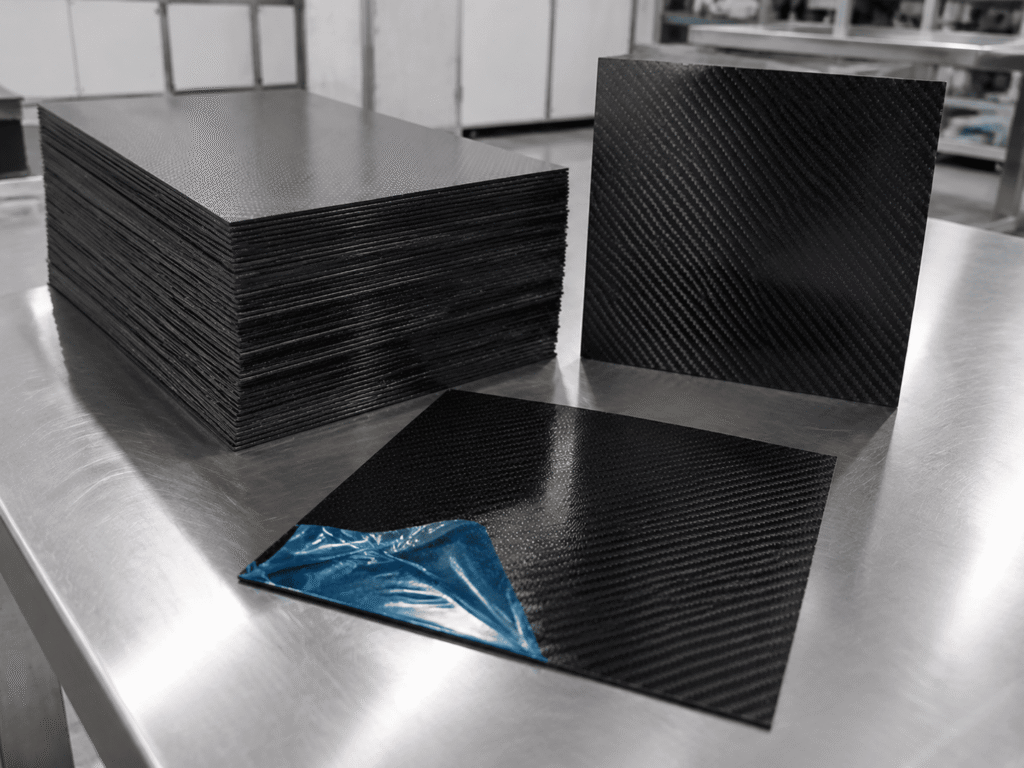
The customer is a carbon fiber sheet manufacturer based in India. The company produces flat carbon fiber sheets from prepreg materials for further processing into sports equipment components, automotive parts, electronic product components, industrial panels, and other lightweight composite products.
The sheets are manufactured by stacking carbon fiber prepreg plies according to the required thickness and fiber orientation, placing the layups between stainless-steel separator plates, and curing them under controlled temperature and hydraulic pressure.
Because each forming cycle takes at least 30 minutes, the customer needed to increase the number of sheets produced per cycle while maintaining stable thickness, flatness, and surface quality.
Customer Requirements
The customer manufactures flat carbon fiber sheets from prepreg materials. Since each hot press forming cycle takes at least 30 minutes, the existing single-layer production method limited the number of sheets that could be produced during each cycle.
The customer required a two-layer hot press capable of forming more carbon fiber sheets in one production cycle. A material handling solution was also needed to align with both working layers and assist with loading and unloading heavy separator plates and carbon fiber sheet stacks.
The main project objectives were to increase production capacity, simplify material handling, and improve the flatness and consistency of the finished carbon fiber sheets.
Production Capacity
Two working layers support the simultaneous forming of two groups of carbon fiber prepreg sheets during one production cycle. This increases the number of sheets processed per cycle compared with a single-layer press. Actual production capacity depends on the sheet dimensions, sheet thickness, number of sheets loaded in each layer, prepreg resin system, and required forming cycle.
Customer Industry
Carbon Fiber Composite Materials Manufacturing
Problems the Customer Needed to Solve
Limited Production Capacity
The existing single-layer forming method limited the number of carbon fiber sheets that could be processed during each cycle.
Long Forming Cycle
Each heating, pressing, and curing cycle required at least 30 minutes, making it difficult to increase output by shortening the cycle time.
Heavy Manual Handling
Operators had to manually handle carbon fiber layups and stainless-steel separator plates, increasing labor intensity.
Sheet Deformation and Flatness
Uneven loading, pressure, or separator plate support could affect sheet flatness and thickness consistency.
Process Stability
Stable temperature, pressure, holding time, and layer alignment were required to maintain consistent forming quality between batches.
Technical Requirements &
Customization Needs
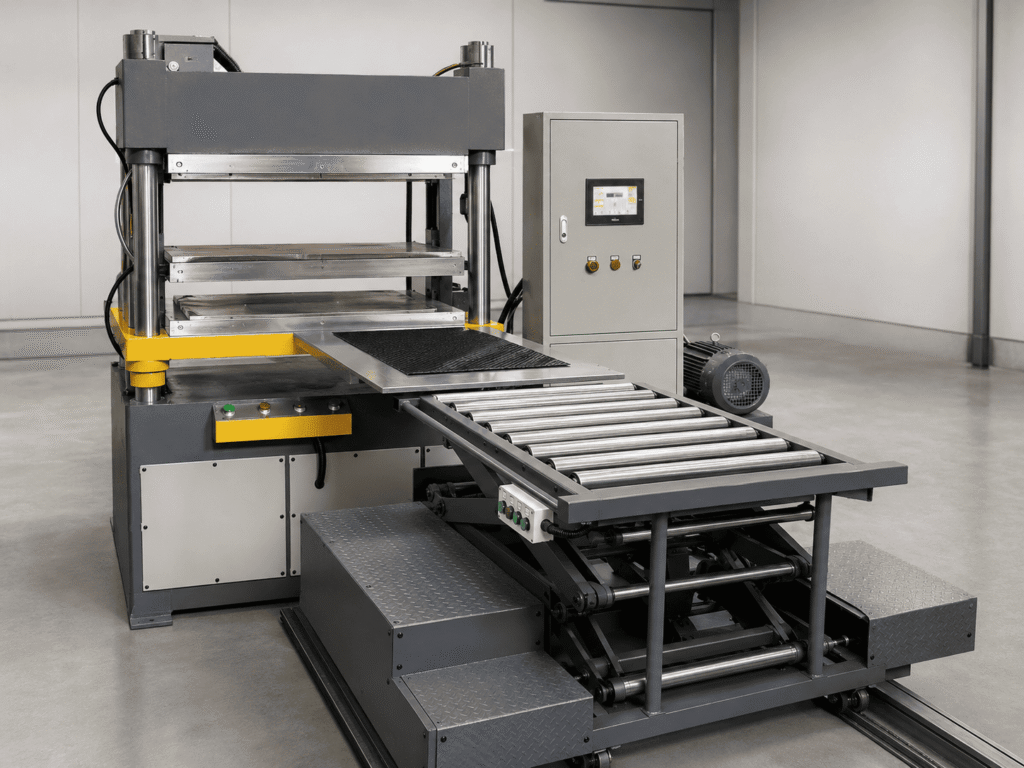
The customer required a two-layer four-column hydraulic hot press to increase the number of carbon fiber sheets formed during each production cycle.
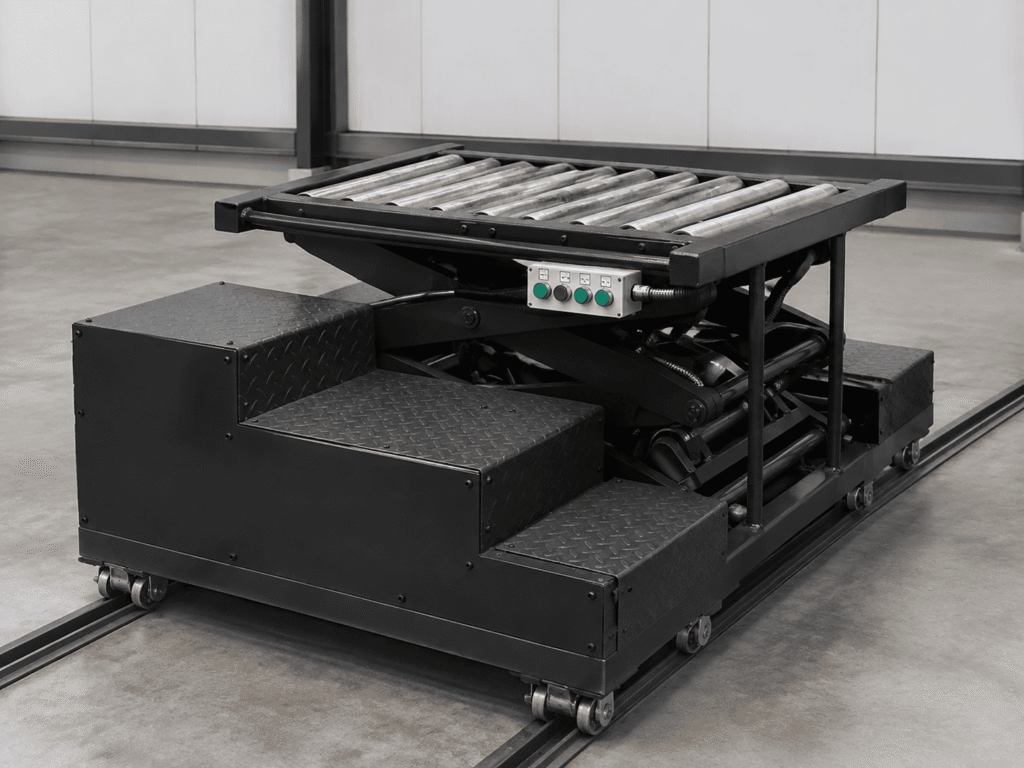
A 3-ton hydraulic roller lift table was configured to match both working levels of the hot press. The lift table uses a 600 × 900 mm non-powered roller tabletop, a lifting height range of 650–1750 mm, hydraulic lifting, motor-driven rail travel, and manual forward and backward feeding.
The hot press temperature, pressure, holding time, platen dimensions, opening height, control system, and power supply were configured according to the customer’s carbon fiber prepreg process and sheet production requirements.
How We Built the Right Solution
Material and Process Analysis
The prepreg type, sheet dimensions, layup structure, separator plates, forming temperature, pressure, and holding time were reviewed before configuring the equipment.
Two-Layer Hot Press Design
A two-layer four-column hydraulic hot press was selected so two groups of carbon fiber sheets could be formed during one production cycle.
Stable Heating and Pressure
The press was configured to provide controlled platen heating, stable hydraulic pressure, and adjustable holding time for consistent sheet curing.
Hydraulic Lift Table Integration
A 3-ton hydraulic roller lift table was configured to align with both working levels of the hot press for loading and unloading.
Customized Production Layout
The lift height, roller tabletop, rail travel, press opening, platen dimensions, control system, and power supply were matched to the customer’s production requirements.
Delivered Equipment &
Production Systems
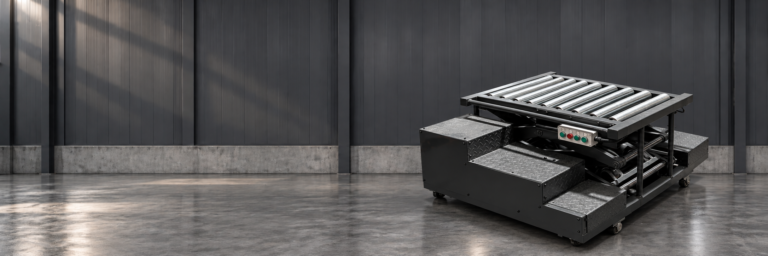
3-Ton Hydraulic Roller Lift Table for Carbon Fiber Sheet Handling
View Details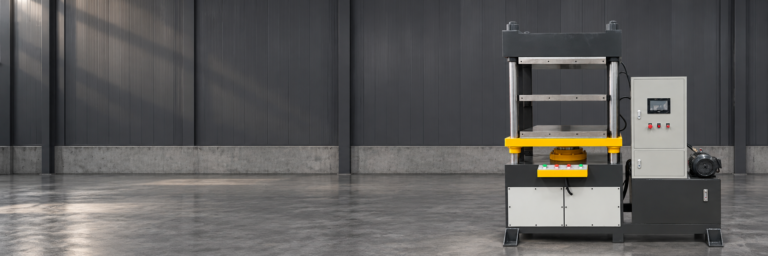
Two-Layer Carbon Fiber Prepreg Sheet Hot Press Machine
View Details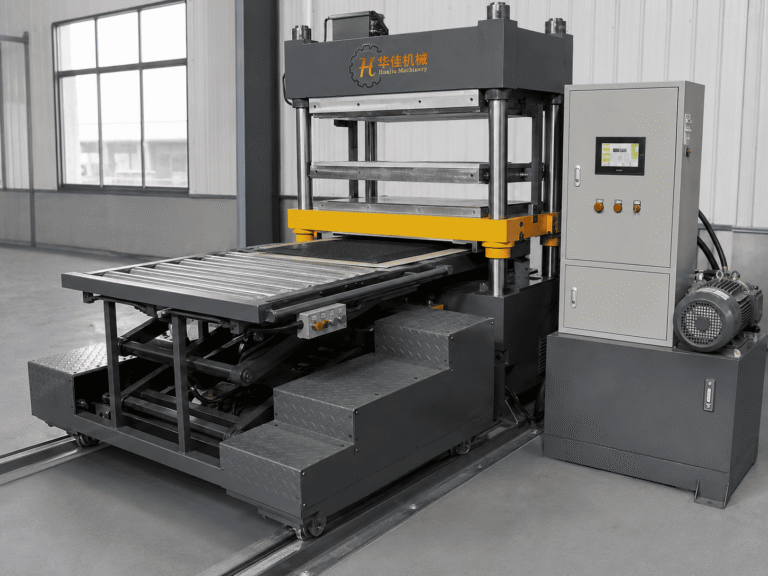
Equipment Built for This Project
The final machine configuration was selected according to the material, product size, process and required production method.
Two working layers allow two groups of carbon fiber prepreg sheets to be formed during one cycle.
Hydraulic pressure is configured according to the sheet dimensions, thickness, and layup structure.
The platen dimensions are suitable for the customer’s carbon fiber sheet production requirements.
Provides the required movement for loading, pressing, and unloading.
Each working layer provides sufficient space for layups and separator plates.
The forming temperature can be adjusted according to the prepreg curing process.
Used to transport and align sheet stacks with both working layers of the press.
Non-powered rollers allow operators to manually push sheets forward and backward.
The table height can be adjusted to match the two working levels.
The platform travels along floor rails for loading and unloading.
Drives the lift table’s rail travel system.
The voltage can be customized according to the customer’s local power supply.
From Material Preparation to Final Inspection
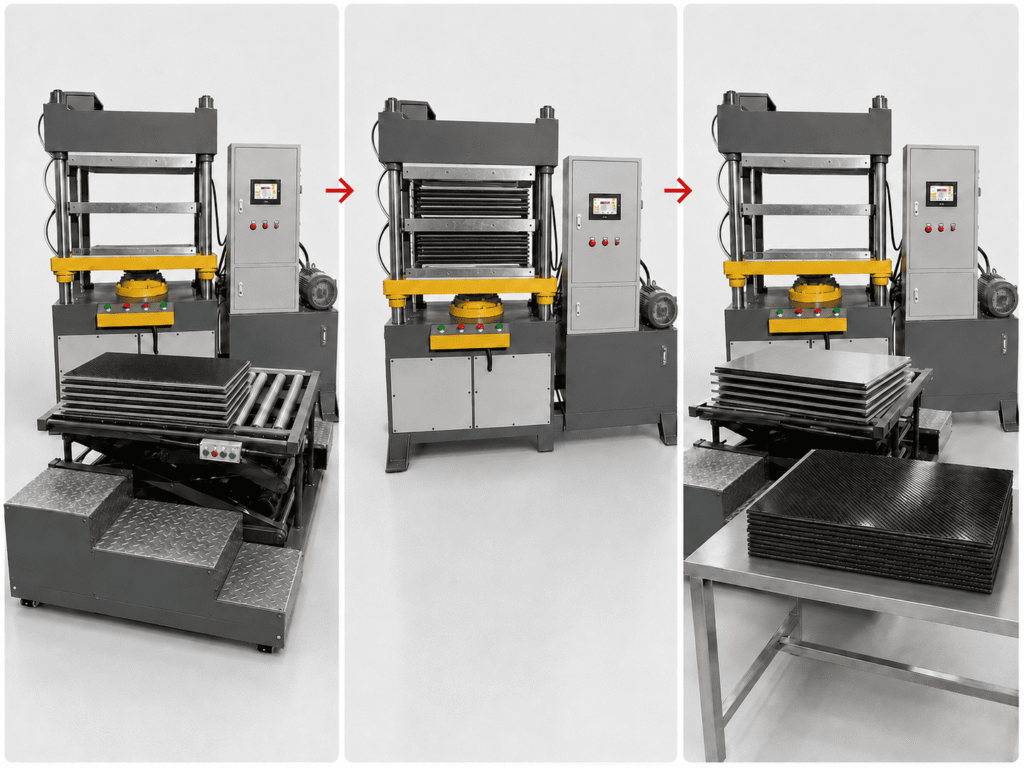
Prepreg Preparation
Cut the carbon fiber prepreg according to the required sheet dimensions.
Ply Layup
Stack the prepreg plies according to the required thickness and fiber orientation.
Separator Plate Assembly
Place the prepared layups between 3 mm stainless-steel separator plates.
Material Loading
Place the separator plates and prepreg stacks onto the hydraulic roller lift table.
Layer Alignment and Feeding
Adjust the platform height to align with the selected press layer, then manually push the material into the press.
Hot Press Forming
Apply the specified temperature, hydraulic pressure, and holding time to consolidate and cure the prepreg layers.
Unloading and Cooling
Remove the formed sheets using the lift table and allow them to cool naturally.
Product Inspection
Inspect sheet dimensions, thickness, flatness, surface quality, and bonding consistency.
Delivery Outcomes & Production Performance
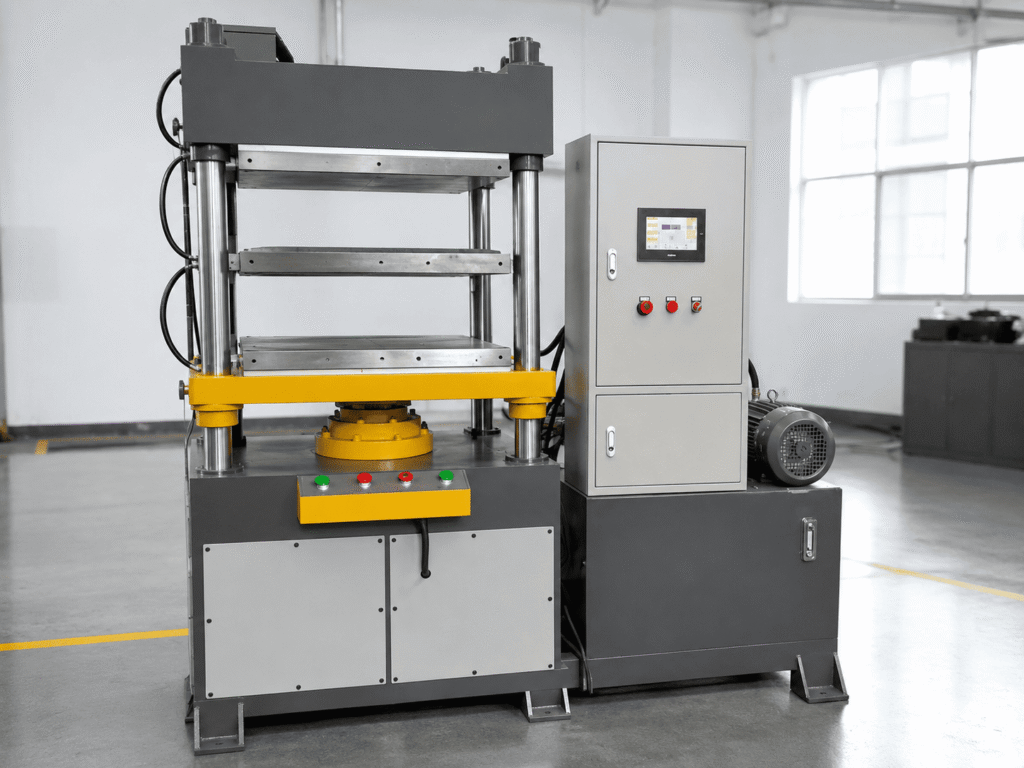
The two-layer hot press increased the number of carbon fiber prepreg sheets that could be processed during each forming cycle, helping the customer improve production capacity without shortening the required curing time.
The 3-ton hydraulic roller lift table can align with both working levels of the press. This simplified the loading and unloading of separator plates and carbon fiber sheets and reduced the difficulty of manually handling heavy material stacks.
Stable hydraulic pressure, controlled platen heating, and appropriate separator plate support also helped improve the flatness, thickness consistency, and overall forming quality of the finished carbon fiber sheets.
The final equipment configuration provided the customer with a more efficient and practical production method for manufacturing flat carbon fiber sheets.
Two working layers support the simultaneous forming of two groups of carbon fiber prepreg sheets during one production cycle. This increases the number of sheets processed per cycle compared with a single-layer press. Actual production capacity depends on the sheet dimensions, sheet thickness, number of sheets loaded in each layer, prepreg resin system, and required forming cycle.
Production Capacity
Two working layers increased the number of carbon fiber sheets processed during each forming cycle.
Material Handling
The hydraulic roller lift table reduced the difficulty of moving heavy separator plates and sheet stacks.
Sheet Flatness
Stable pressure, controlled heating, and separator plate support improved sheet flatness and thickness consistency.
Process Stability
Adjustable temperature, pressure, and holding time provided more stable forming conditions between production batches.
Delivered Equipment & Project Outcomes
Two-Layer Carbon Fiber Prepreg Sheet Hot Press
A two-layer four-column hydraulic hot press was delivered for forming two groups of carbon fiber prepreg sheets during one production cycle, increasing production capacity while maintaining stable temperature, pressure, and curing time.
3-Ton Hydraulic Roller Lift Table
A 3-ton hydraulic roller lift table was supplied to align with both working levels of the hot press, simplifying the loading and unloading of carbon fiber layups and stainless-steel separator plates.
Carbon Fiber Sheet Production Line
The complete production line integrates prepreg preparation, material handling, two-layer hot pressing, cooling, and inspection to provide the customer with a practical and efficient carbon fiber sheet manufacturing solution.
Installation & Production
Visual Documentation
Need a Similar Production Solution?
Share your material, product size, target capacity and forming requirements. Our engineering team will evaluate the process and recommend a suitable custom equipment configuration.
Process Analysis
Material and forming assessment
Custom Configuration
Pressure, platen and control design
Testing Support
Machine testing before delivery
Tell Us About Your Product
Send us your product drawing, material, size and expected output. We will help you confirm the forming process and machine configuration.
Request Consultation View More Customer CasesTechnical analysis · Custom design · Export support